
How Nan Khatai is Made?
Knowing how nan khatai is made helps you understand exactly how Nan Khatai is made and why a bakery like Khalifa Bakers, which has followed the same traditional biscuit preparation method since 1925, produces a different result from mass-made versions. Nan Khatai is a traditional South Asian shortbread biscuit. It has been baked in Pakistan…
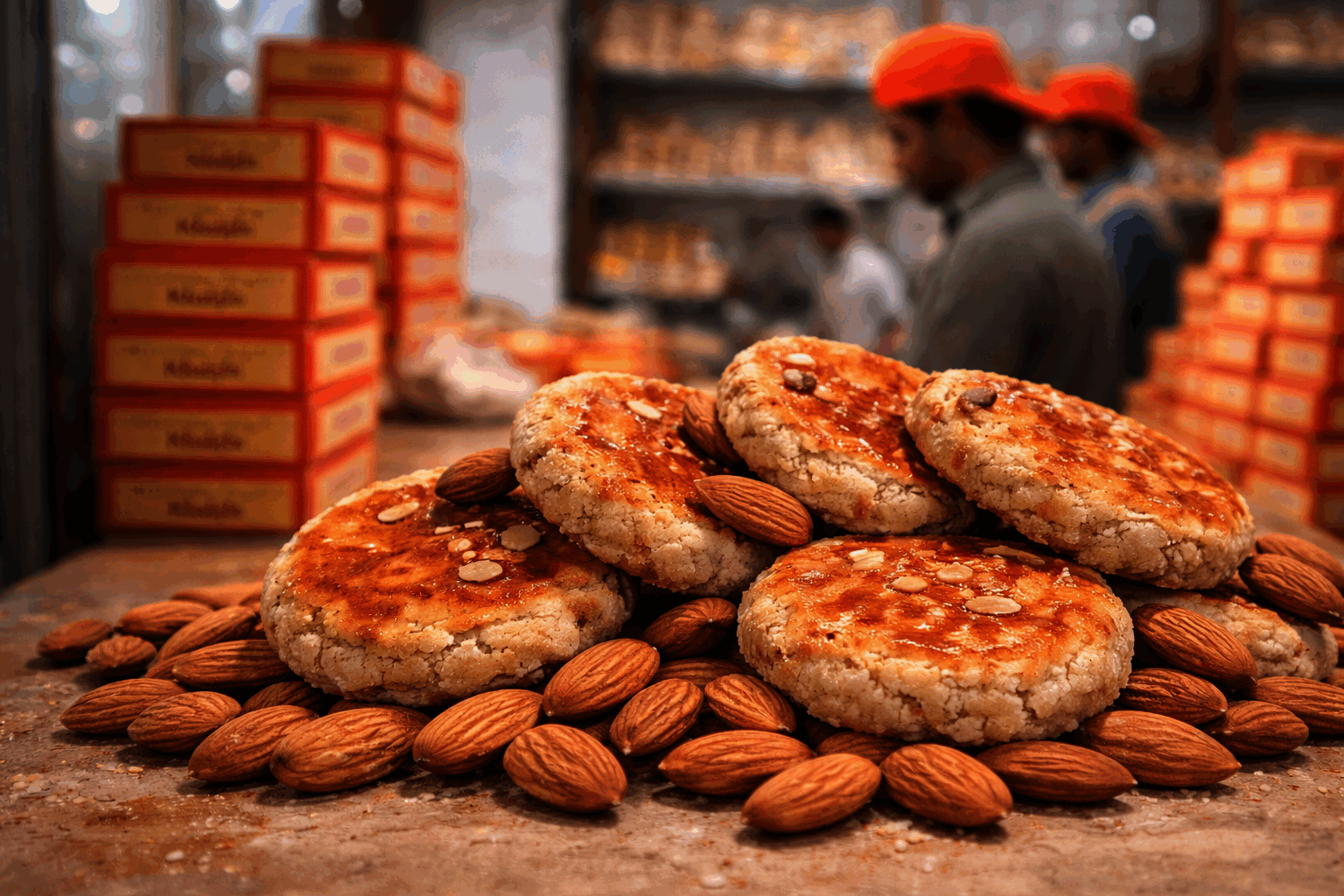
Knowing how nan khatai is made helps you understand exactly how Nan Khatai is made and why a bakery like Khalifa Bakers, which has followed the same traditional biscuit preparation method since 1925, produces a different result from mass-made versions.
Nan Khatai is a traditional South Asian shortbread biscuit. It has been baked in Pakistan and India for centuries. The recipe is simple, but the technique behind a perfect Nan Khatai takes years to master.
What is Nan Khatai made of?
Traditional Nan Khatai is made from refined flour (maida), pure ghee, powdered sugar, and ground cardamom. Some recipes include a small amount of chickpea flour (besan) or semolina (sooji) for texture. Baking soda is used as a leavening agent.
The Core Ingredients
A traditional Nan Khatai uses five to six basic ingredients. Each one plays a specific role in the final texture and taste.
Ghee (clarified butter): This is the fat that gives Nan Khatai its melt-in-mouth texture. Pure desi ghee produces a richer flavor than vegetable shortening or butter. At Khalifa Bakers, ghee is central to the recipe.
Refined flour (maida): This forms the base of the dough. It gives Nan Khatai its soft, crumbly structure.
Powdered sugar: Finely ground sugar blends into the dough smoothly. It prevents graininess and helps the biscuit brown evenly.
Cardamom (elaichi): Ground cardamom is the main flavor. It gives Nan Khatai its distinctive aroma. Without cardamom, the biscuit loses its identity.
Baking soda: A small amount helps the biscuit rise slightly and develop a light, airy crumb inside.
Optional additions: Chickpea flour adds a nuttier flavor. Semolina adds a slight graininess. Almonds on top (for Badami Nan Khatai) are pressed in before baking.
What is the difference between maida and besan in Nan Khatai?
Maida is refined wheat flour. It gives Nan Khatai a soft, fine crumb. Besan is chickpea flour. When used in small amounts, it adds a slightly dense, nutty quality to the texture.
How Nan Khatai Is Made: The Traditional Process Step by Step
Making Nan Khatai at a bakery like Khalifa Bakers follows a specific process. Each step affects the final result.
Step 1: Cream the Ghee and Sugar
The ghee must be at room temperature, not melted and not cold. It is mixed with powdered sugar until the mixture becomes light and fluffy. This step creates the soft crumb in the finished biscuit.
Why does ghee need to be at room temperature for Nan Khatai?
Room-temperature ghee traps air when mixed with sugar. That trapped air is what makes the biscuit light and crumbly after baking. Cold ghee does not cream properly. Melted ghee makes the dough too loose to shape.
Step 2: Add Dry Ingredients
Flour, cardamom, and baking soda are sifted together. They are then added gradually to the creamed ghee and sugar. The dough is mixed until it just comes together. Overmixing makes the biscuit tough.
Step 3: Shape the Dough
Traditional Nan Khatai is shaped by hand. Small portions of dough are rolled into balls, then gently pressed into a round, slightly flat disc. At Khalifa Bakers, the shaping is done by hand, not by molds.
How are Nan Khatais shaped in a traditional bakery?
In traditional bakeries, Nan Khatais are hand-rolled into balls and then pressed flat by the baker’s palm. The slight unevenness in shape is a sign of handmade production.
Step 4: Add Toppings
For Badami (Almond) Nan Khatai, a whole or split almond is pressed gently into the center of each shaped disc before baking. For plain Nan Khatai, no topping is added.
Step 5: Bake
The shaped biscuits are placed on greased trays and baked at around 160 to 180 degrees Celsius. The biscuits are done when they turn a pale golden color on top and slightly darker at the base.
How long does it take to bake Nan Khatai?
Nan Khatai typically bakes in 15 to 20 minutes at around 160 to 180 degrees Celsius. The exact time depends on the size of the biscuit and the type of oven.
Step 6: Cool Before Packing
Nan Khatai is very fragile when it comes out of the oven. It firms up as it cools. Moving or stacking it too early causes breakage. A fully cooled Nan Khatai should be crisp on the outside and crumbly inside.
Why does Nan Khatai need to cool before packaging?
Hot Nan Khatai is structurally weak. The ghee inside has not solidified yet. Moving or stacking hot biscuits causes them to break or lose their shape.
What Makes Khalifa Bakers’ Nan Khatai Different
Most commercial Nan Khatai uses vegetable shortening instead of pure ghee. This cuts cost but also changes the flavor. Khalifa Bakers uses pure ghee, which gives their version a richer taste and a longer-lasting aroma. The dough is also made in smaller batches, meaning fresher dough and more consistent quality per piece.
Does Khalifa Bakers use ghee or shortening in their Nan Khatai?
Khalifa Bakers uses pure ghee in their Nan Khatai. This is a key part of what differentiates their product from mass-produced versions that use vegetable shortening as a cheaper substitute.
The Role of Cardamom
Cardamom is not optional in traditional Nan Khatai. It is the defining flavor. In Pakistani food culture, cardamom-scented sweets have been part of weddings, Eid celebrations, and everyday chai-time for centuries. The cardamom used in quality Nan Khatai is freshly ground, not pre-packaged powder.
Why is cardamom used in Nan Khatai?
Cardamom has been a core spice in South Asian sweets for centuries. In Nan Khatai, it provides the main flavor and complements the richness of ghee. Together, they create the signature taste that makes Nan Khatai distinct from plain shortbread biscuits.
Summary
Traditional Nan Khatai is made with ghee, flour, powdered sugar, cardamom, and baking soda. The dough is hand-shaped, then baked until golden. At Khalifa Bakers, the recipe has remained unchanged since 1925. The use of pure ghee, fresh cardamom, and daily fresh batches is what makes their Nan Khatai stand out. This is what separates a traditional biscuit preparation using pure ghee-based dough technique from commercial shortcuts.
To try traditional Nan Khatai, visit Khalifa Bakers at Mochi Gate, Walled City, Lahore. Open daily 9:00 AM to 9:00 PM. Order online at khalifabakers.shop or call 03707120749.